
Personal & companion care
Help with bathing, dressing, meals, medication and daily safety, so your loved one is never left alone.
What a personal care aide does
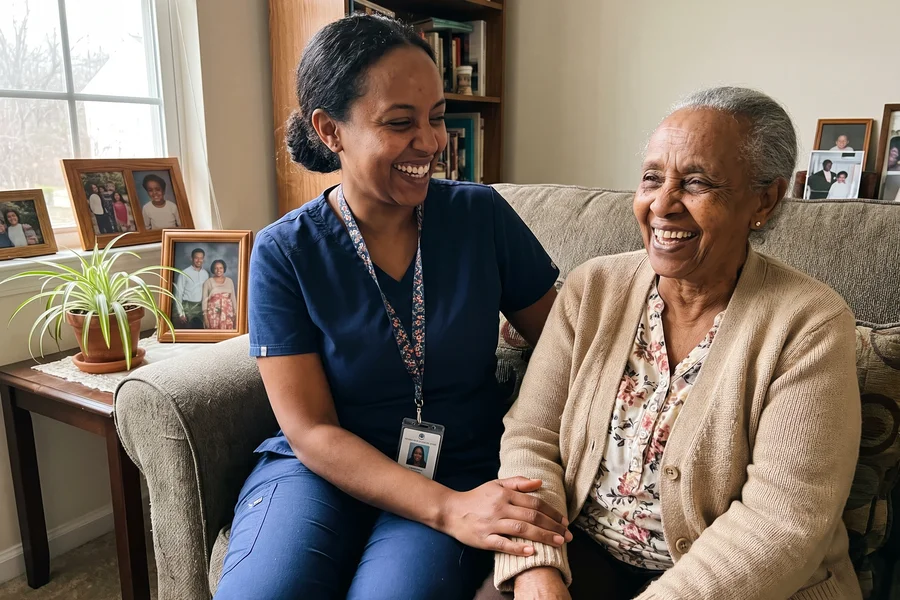
Our aides are trained, background-checked and supervised by a registered nurse. They are in the home to do the tasks that have become difficult, and to be a steady, friendly presence while they do them.
- Bathing, showering and grooming, safely and privately
- Dressing and personal hygiene, including incontinence care
- Toileting and transfers, help getting in and out of bed or a chair
- Walking and mobility support, and reducing the risk of falls
- Meal preparation the way your family eats, including fasting days
- Medication reminders and watching for changes in condition
- Light housekeeping and laundry, keeping the home safe to move around in
- Errands, shopping and rides to doctors and appointments
- Companionship, conversation, walks, coffee, church, phone calls to family
What we cannot do
Personal care aides do not give injections, change sterile dressings or make clinical decisions. If your loved one needs those, look at skilled nursing. Many families use both.
Typical schedules
Families usually start with one of these:
- A few hours, two or three mornings a week
- Four to six hours daily, for bathing and meals
- Full days while adult children are at work
- Overnight cover for someone who wanders or falls
How we choose and supervise the caregiver
Before an aide is assigned to a family, they are screened through a criminal background check, their credentials and work eligibility are verified, and they complete our orientation on safe transfers, infection control, dementia behaviour and client rights.
Once care begins, a registered nurse reviews the plan and checks in regularly, and a coordinator is available to you by phone. If the match is not working, for any reason, tell us and we will change it.
Where personal care usually helps most
After a hospital stay or a fall, when memory loss makes it unsafe to be alone, when a spouse who has been the caregiver is exhausted, or when someone has stopped managing meals and showers on their own.
Not sure where to start? Just call us.
Tell us what is going on at home. We will explain your options in plain language, in English or Amharic, and tell you whether we are the right fit. The consultation is free and there is no obligation.
Speak with a care coordinator
(703) 941-8412Mon–Fri, 9:00 am – 5:00 pm
After-hours line for current clients